
How a credit application form actually protects your cash flow
Practical tips to reduce unpaid invoices — and to decide when to escalate.
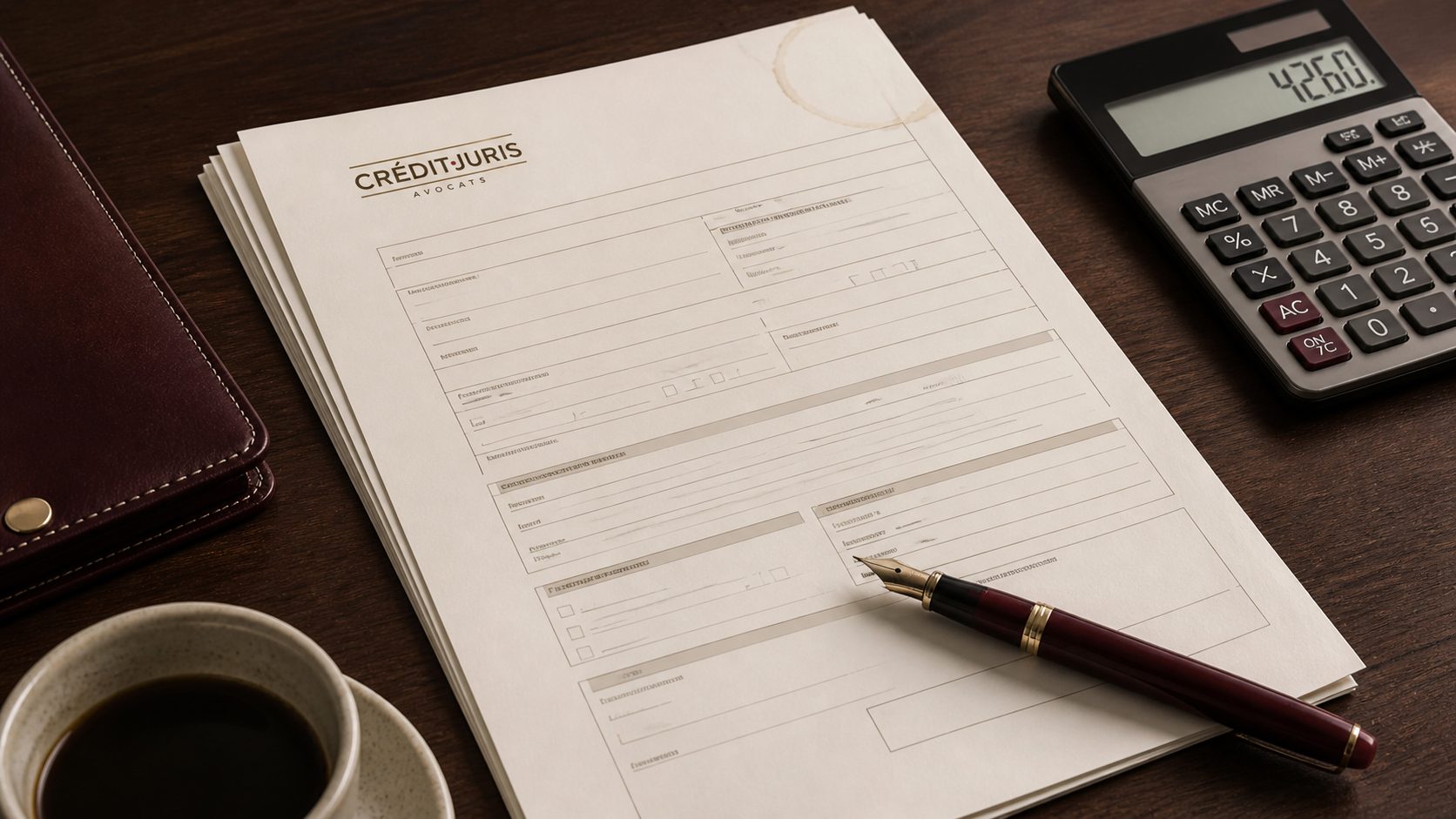
Extending credit to a customer is often what closes the sale — but it is also a decision that lands directly on your cash flow. Too many businesses grant payment terms on trust, with little or no framework around them. The result: late payments, disputes, follow-ups that drag on and, in some cases, receivables that are never collected.
One simple tool changes that out of all proportion to what it costs: the credit application form. Built properly, it helps you choose your customers better, set the rules at the outset, and makes collection far easier if an account goes bad.
Customer credit: an advantage that has to be managed
Offering terms (net 14, net 30, and so on) can speed up sales and make your business more competitive. But that service has a price: for a while, you are financing your customer.
Without a clear framework, you are exposed to:
- recurring late payments;
- misunderstandings about the terms;
- invoice disputes (and the “nobody told me that”);
- a shortage of usable information if you have to chase the account or take more formal steps.
A credit application form exists precisely to turn an informal understanding into a structured commercial relationship.
Collect the right information — before it is too late
The form's first job is simple: identify the customer clearly and capture contact details you can rely on.
A good form lets you gather, among other things:
- the legal name and the operating (trade) name;
- the full address (head office, billing, delivery);
- contact details (phone, general email, and the accounts-payable email);
- the business number (NEQ / federal BN) and any other identifier relevant to your context;
- basic company information (industry, year founded, and so on);
- trade and/or banking references.
Why does this matter? Because the day an invoice goes past due is not the day you want to start hunting for information. A properly assembled customer file gives you speed — and in collection, speed usually means recovering more.
Credit terms: put them in writing
An effective form is more than a set of blanks to fill in. It should also incorporate (or attach) your credit terms and obtain the customer's clear agreement to them.
Things worth spelling out:
- the payment deadline (e.g. net 14 days from the invoice date);
- interest or charges that apply on late payment (adapted to the rules that apply to you);
- how an invoice is disputed (e.g. in writing, within a set number of days);
- your right to suspend credit or require cash payment if the account slips;
- the treatment of collection costs (to the extent the law allows).
The point is not to be harsh for its own sake — it is to be clear. Clarity cuts short the endless discussions and the grey areas.
The part most often underrated: the signature
When a customer signs a document that contains your terms, you sharply reduce the risk of arguments along the lines of:
- “I never agreed to that.”
- “Nobody ever told me.”
Without drowning anyone in paperwork, a signature — on paper or electronic, whichever suits your practice — gives the relationship a concrete frame and makes internal management far easier.
Rolling it out without slowing down sales
A good process does not have to be heavy. A few simple practices:
- require the form before granting a credit limit (or before any increase);
- keep it short but complete: the essentials only, no filler questions;
- standardize approval: who signs off, within what time, against what criteria;
- have a fallback: cash or a deposit until credit is approved.
The goal is to protect your cash flow without creating friction.
And if it still doesn't get paid?
Even with a good form, some accounts go past due. When they do, that document becomes an asset: you have the customer's identity, working contacts, the commitments made, and clear terms.
The earlier you step in — structured follow-up, written notice, a demand letter where needed — the more control you keep over the file.
Conclusion
A credit application form is not an administrative detail. It is a risk-management tool that can:
- reduce unpleasant surprises;
- shorten payment delays;
- cut down disputes;
- strengthen your position if collection becomes necessary.
To get you started, here is a template you can download and adapt.
Ready-to-download PDF (customize it and have it reviewed for your situation).
Sources referenced
- Atradius study: Payment Practices Barometer (North America) — 2014
- Credit Today: Credit policies can reduce bad debt