
The cardinal sin of debt collection
Practical tips to reduce unpaid invoices — and to decide when to escalate.

The biggest mistake in receivables collection is a strategy of waiting. In this field, being proactive is almost always more profitable than being reactive.
Rates vary by industry, legal regime and location, but one thing holds everywhere: the more time passes, the less a receivable is worth.
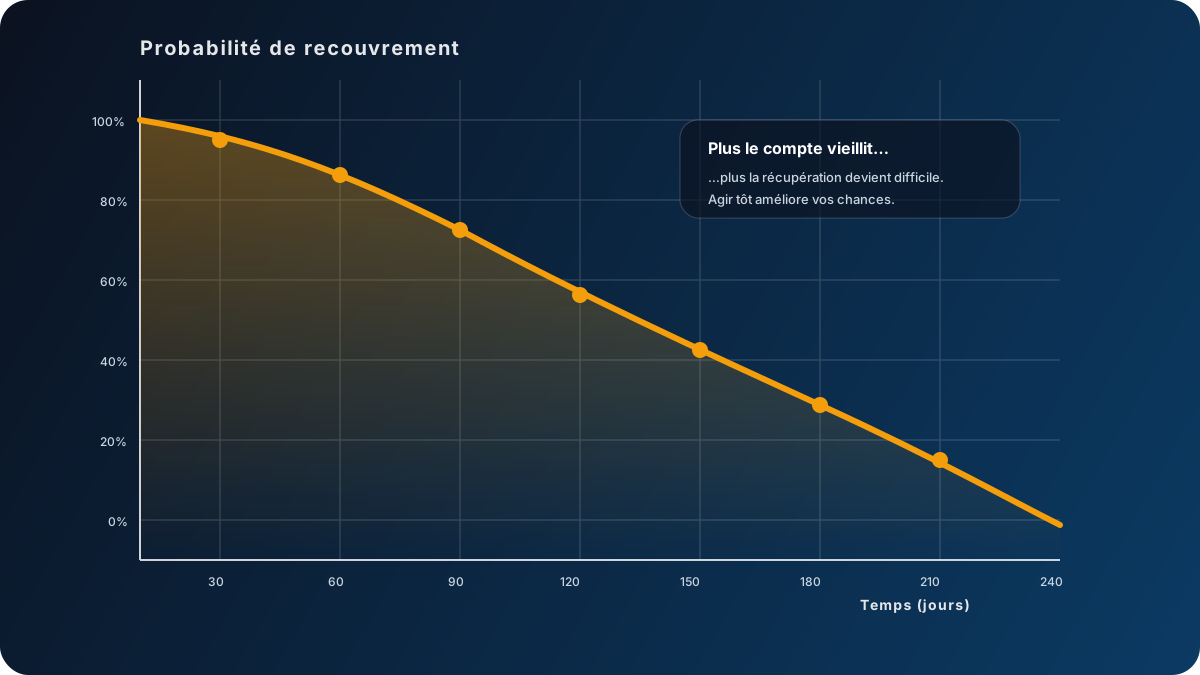
Faced with a customer who will not pay, act early — if only by sending a structured demand letter. If internal attempts fail, it may be time to hand the file to a firm that does this for a living.
What a long wait costs you
Waiting too long has real consequences: the probability of recovering falls, information goes missing, and the debt becomes harder to prove or to enforce. In some cases you are also moving toward a limitation problem.
An account that stays past due for a long time can also be a symptom of deeper financial trouble at the debtor. The longer you wait, the more likely you are to find yourself queued behind other creditors.
There are alternatives to waiting passively: negotiation, a payment plan, a demand letter, or a structured collection mandate.
Valuing your receivables
Banks and factoring companies typically value a receivables portfolio by segmenting it by age (30, 60, 90+ days) and applying expected recovery percentages to each band. Understanding that logic helps you measure what waiting actually costs.
Recognizing an account that is going bad
- Repeated delays, or promises that are not kept.
- Frequent changes of contact (AP, controller, management).
- Late disputes, or “new” problems that appear suddenly.
- Partial payments with no clear plan behind them.
When those signals appear, it is usually worth moving into a structured pre-litigation process (evidence → follow-ups → negotiation → decision point). That is exactly what our pre-litigation on contingency service covers.
Why use a firm that specializes in commercial debt collection?
A specialized firm brings a method, the reflexes that come from volume, and the ability to escalate when escalation is warranted — while protecting your reputation and, where it can be saved, the commercial relationship.
Conclusion
Do not let an unpaid debt settle in. The earlier you act, the better your chances of recovering — and the more control you keep over both cost and time.